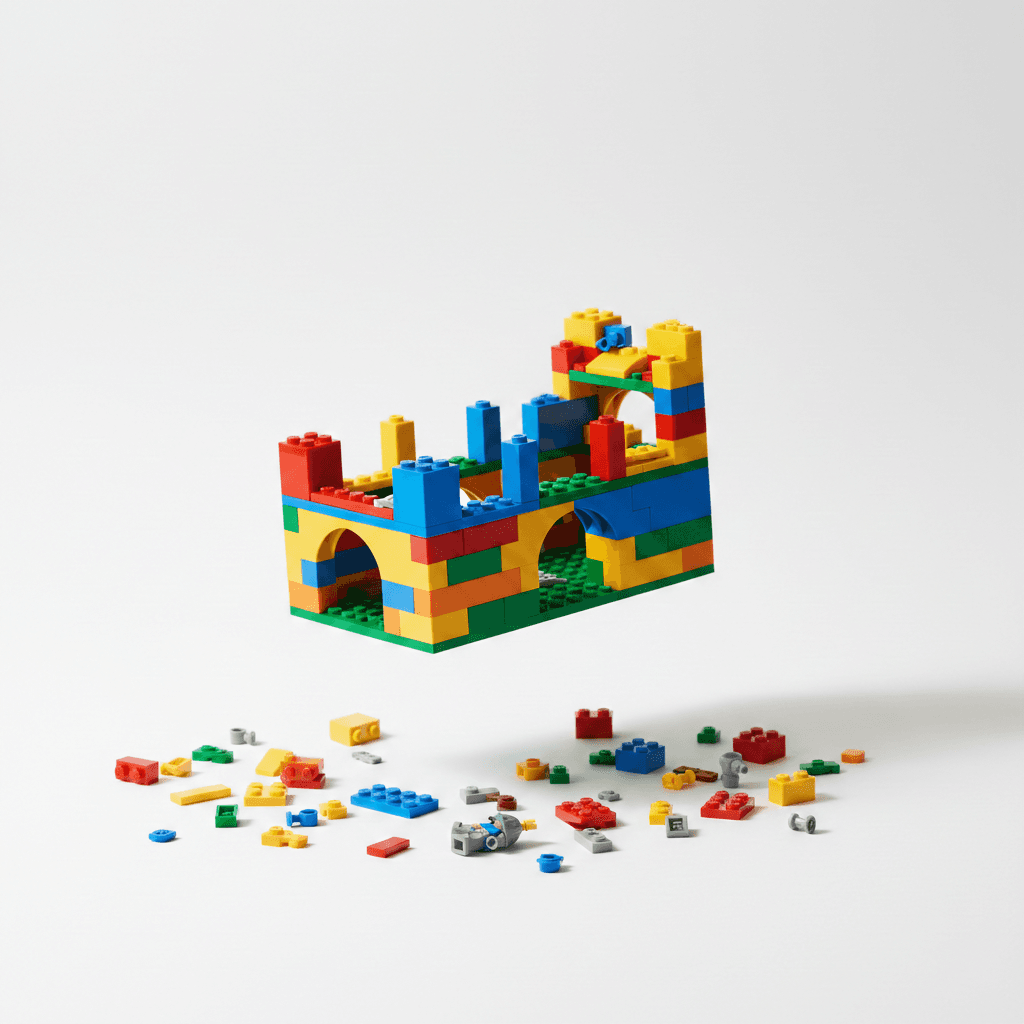
Systems Without Structure
Modern marketing loves the word “systems.”
Automation systems.
Content systems.
Funnel systems.
Omnichannel systems.
In reality, most businesses are handed strategies that require more time, people, and infrastructure than they actually have.

The agency norm:
Agencies design growth machines that assume:
Unlimited content capacity
Dedicated dev resources
Internal marketing managers
Weekly asset production
Immediate implementation
It’s like the strategy is built from a façade the agency has sold themselves on.
What This Looks Like
A content engine requiring four blogs, two videos, and daily social clips per week.
Multi-step funnels that no one maintains.
Automation sequences that break because no one monitors them.
SEO roadmaps spanning dozens of technical tasks with no owner.
Reporting structures that require manual data consolidation every week.
The system looks impressive.
But no one can sustain it.
What Direction Actually looks like:
If your team OR ours cannot realistically sustain:
Weekly long-form content
Multi-platform video distribution
Aggressive technical overhaul timelines
Then that is not the plan.
We do not hand you a blueprint that depends on effort you cannot maintain.
We do not design a machine that collapses under its own weight.
We build:
Lean structures
Defined ownership
Controlled workload
Scalable architecture
We simplify before we scale.
What Structured Systems Look Like
Capacity-Aligned Strategy
The plan matches the team, budget, and infrastructure.
Defined Ownership
Every moving piece has a clear operator.
Sustainable Cadence
Production levels that can be maintained for 12+ months.
Compounding Focus
Priority given to high-intent keywords and revenue channels first.
Scalable Expansion
Growth layers added only after the base proves stable.
The Bottom Line
Most marketing systems fail because they are overbuilt.
Too many channels.
Too many deliverables.
Too many dependencies.
If a strategy requires more than your organization can sustain, it isn’t strategic.
It’s decorative complexity.
We don’t build decorative complexity.